
One of the paradoxes of medical sciences is building boundaries between disciplines and drawing dividing lines between research fields.
Moreover, medical research, whose major objective is to find out the basis of human diseases, is quite often governed by reductionism. Thus, “medicine is following a philosophy of ‘reductionism’: deconstructing a complex process into its component parts to enable better comprehension”.
We believe that in contemporary medical research:
- Reductionism remains a popular approach and mindset; and particularly immunology, a major research field, is dominated by cell-centric reductionism.
- Also, there is a ‘cultural divide’ between neuroscience and immunology – the two largest medical research areas.
- The role of ‘systemic’ factors such as the neuroendocrine-immune dysfunction, and the role of stress and stress-immune interactions is often overlooked and is a poorly understood area.
- The concepts discussed at BrainImmune represent recent advances in the field; they are not available in medical textbooks, and, as a general rule, not taught at medical schools, or PhD training or programs, particularly in the immunology world.
We believe that
the neuroendocrine-immune dysfunction and abnormal stress-immune interactions represent major components essential to all common complex human diseases.
Some examples from BrainImmune are presented below:
Allergy and Asthma
Perhaps this starts from the stress that a mother experiences during her pregnancy. Thus, maternal stress during pregnancy is able to increase offspring risk and susceptibility to asthma and the release of glucocorticoids as the result of stress in pregnancy can induce asthma susceptibility in offspring.
This formed the basis for the fetal programming of asthma hypothesis, which proposes that stress experienced during pregnancy may lead to vulnerability of the immune system towards atopic diseases and asthma.
In childhood, multiple mechanisms affect the stress response, which in turn influences the manifestations of asthma in children. Moreover, we provide some historical perspectives of the Andor Szentivanyi and the beta adrenergic theory of allergy and asthma. According to Szentivanyi, “… abnormality in asthma lies in the reduced functioning … of the beta adrenergic system …,”. The beta adrenergic theory regards asthma not as an ‘immunological disease’, but as a unique pattern of bronchial hypersensitivity to a broad spectrum of immunological, psychic, infectious, chemical and physical stimuli.
Autoimmunity and Rheumatic Diseases
We feature over 25 articles in this area. For instance, this includes:
- The role of hormonal effects in sexual dimorphism of the autoimmune process.
- The role of stress in organ specific autoimmunity.
- The first study identifying glucocorticoid-resistant IL-17- and IL-22-secreting CD4+ T cells in multiple sclerosis.
- And chronic stress promoting autoimmunity via glucocorticoid resistance.
Thyroid autoimmunity
We present the attractive new concept on stress-induced Th2 shift driving thyroid autoimmunity, which is in favor of the clinical data that stress hormones influence the clinical expression of thyroid autoimmunity towards the development of Graves’ disease (GD).
Or the fascinating story, going all the way back to the 18th century – and the first description of hyperthyroidism in 1786 by Caleb Parry, and, later, the first patient described by Parry, who developed hyperthyroidism following acute stress.
Rheumatoid Arthritis
We also outline the role of several hormones in the pathogenesis and/or treatment of rheumatoid arthritis (RA).
 Edith Piaf, the famed French singer, also had severe RA; Edith Piaf became addicted to painkillers she took for rheumatoid arthritis. Indeed, one of her famous songs was “Non, je ne regrette rien”. That philosophy could have applied to her approach to living with RA.
This includes:
- The discovery of cortisone more than seventy years ago. September 21, 1948 marked the beginning of a new era of medicine, when the first patient with rheumatoid arthritis was injected with cortisone.
- The relative adrenal insufficiency and some unresolved issues and optimizing glucocorticoid treatment.
- The role of sympathetic nervous system dysfunction in rheumatoid arthritis.
Or the role of:
- estrogens and their protection against rheumatoid arthritis;
- testosterone and its protection against arthritis;
- vasoactive intestinal peptide (VIP) reducing the pathogenic profile of T helper (Th)17 cells;
- the vitamin D deficiency affecting arthritis onset and development via reduction in synovial innervation and neurotrophin levels;
- Or discussing new evidence that norepinephrine (noradrenaline) is able to suppress the highly pathogenic T helper 17 (Th17) cells in a mouse model of arthritis.
And, last but not least, the improvement and remission of rheumatoid arthritis during pregnancy, which is not induced by a single factor, but by a complex interaction of endocrine and immunological networks present during gestation.
Inflammatory bowel disease (IBD)
A Canadian research group discussed the evidence for a dysfunctional sympathetic-immune interface in disease states of the Gastrointestinal (GI) tract. During the early stages of inflammatory bowel disease (IBD) the sympathetic nervous system may enhance inflammation by increasing immune cell infiltration and promoting antigen presentation. In contrast, during established GI inflammation, catecholamine-induced inhibition of TNF-α secretion and increased production of Th2 cytokines may limit the inflammatory response.
Psoriasis
We discuss new findings about the neurogenic inflammation in this condition. A 2014 study, published in Nature magazine, indicated that sensory nerves drive interleukin-23 (IL-23) production by dermal dendritic cells (DDCs), and, thus, contributing to psoriasis-like inflammation.
 The vicious circular pathway between nociceptive neurons and Th17 immune responses in psoriatic lesions. Neuropeptides (CGRP, SP, VIP) prompt the release of IL-6 and IL-23 and bias antigen presentation for Th17 cell responses. Neuropeptides also prompt Th cells to release IL-17, IL-31, and IL-33. Increased cytokines can sensitize TRPV1 and TRPA1 channels through GPCRs via secondary messenger-signaling pathways, the cAMP/PKA and PLC/PKC pathways, following Ca2+ elevation. From ‘The Role of Nociceptive Neurons in the Pathogenesis of Psoriasis’ in Front. Immunol., 29 September 2020. Public Domain.
In this model, a subset of sensory neurons expressing the ion channels TRPV1 and Nav1.8 play a major role in triggering IL-23 production by nearby DDCs. Thus, IL-23 in turn may act on skin-resident T cells to induce IL-17 and IL-22, and precipitate the recruitment of neutrophils and monocytes that drive psoriasis-like skin inflammation. By 2020, it became clear that the neurogenic inflammation, induced by nociceptive neurons and Th17 responses, has a fundamental role in psoriasis.
Lidocaine is a non-selective blocker to voltage-gated sodium channels, and new research indicates that lidocaine acting on sensory neurons can down-regulate disordered neurite growth and pro-inflammatory CGRP release. Briefly, lidocaine improves psoriasis via inhibition of CGRP-induced IL-23 production. Thus, modulating the neuro-immune cross-talk may turn out to be a new approach to control neurogenic inflammation.
Cardiovascular Diseases
Stress and Cardiovascular Diseases
We review new evidence and understanding that links stress, proinflammation and cardiovascular diseases. Chronic stress can enhance and maintain a proinflammatory state, which plays an important role in the pathogenesis of cardiovascular diseases, making the phenomenon of proinflammation central in this new concept.
In fact, stress may start driving cardiovascular and metabolic risk early in life. The 1958 British Birth Cohort Study is perhaps the first to suggest that “increased risk of cardiometabolic disease associated with distress in childhood may be maintained even if distress remits by adulthood”.
Furthermore, men with low stress resilience during youth are prone to approximately 40% increase in the risk of developing hypertension in later life. The combination of low stress resilience and high body mass index (BMI) triples the hypertension risk. This indicates that deficiency of stress resilience in late adolescence is linked to increased risk of hypertension in adulthood.
In addition, new evidence links myocardial inflammation to the pathophysiology behind stress-induced cardiomyopathy, also known as “Takotsubo” cardiomyopathy. Thus, stress-induced inflammation, and particularly catecholamine-induced inflammation, might represent the driving force leading to the development of acute symptoms and transiently altered ventricular contractility.
We also discuss that T helper (Th)1 and Th17 cells and cytokine pathways may drive systemic inflammation in Takayasu arteritis; and a study demonstrating glucocorticoid resistance of Th17 Cells in Takayasu Arteritis.
Correlations, Predictors, CRP versus IL-6
A recent study indicates that a higher resting heart rate (RHR) is linked to low natural killer cell activity (NKA). Reduced NKA is associated with an increased susceptibility to infections and increased risk of cancer. This suggests the usefulness of RHR, a simple indicator reflecting increased sympathetic nervous system activity, in predicting reduced immune function or NK cell activity.
A 2016 study suggests that adversity during childhood and trauma during adulthood are associated with elevated high sensitivity C-reactive protein (hsCRP). This is perhaps the first large population-based study to assess the connection between adulthood trauma exposure and inflammation.
The mechanisms are not well-understood, however, although chronic low-grade inflammation is thought to play a role based on studies of patients with depression, anxiety and post-traumatic stress disorder. While hsCRP is a nonspecific marker in and of itself, it is an easy way to detect low levels of inflammation.
 Of note, a recent study in high-risk Japanese patients demonstrates that an increased level of serum interleukin-6 (IL-6) is a significant predictor of future cardiovascular events.
One of the paradigm shifts in our understanding about atherosclerosis is the development of the concept that it is potentially caused by a chronic inflammation. Serum interleukin-6 (IL-6) – as a significant predictor of future cardiovascular (CV) events, is discussed in several studies; and here, importantly – why serum IL-6, but not CRP may be a significant predictor of CV events.
Cancer
We feature more than 25 articles in this area. Here we discuss a Science magazine study revealing that the autonomic nerves contribute to prostate cancer growth. Namely, the sympathetic nervous system via the β2- and β3-adrenergic receptor pathways participate in the early phase of tumor development.
We also discuss a Nature magazine study disclosing an impaired neuro-endocrine microenvironment of the bone marrow, and particularly that the sympathetic neuropathy plays a crucial role in the development of myeloproliferative neoplasms (MPNs). The study reports that the sympathetic nerve fibers and the supporting Schwann cells are reduced in the bone marrow of MPN patients.
The Role of Stress and the Sympathetic Nervous System
A recent study reveals that stress and epinephrine promote leukemia progression. Another study, discussed in this report, indicates that stress can enhance the progression of human pre-B cell acute lymphoblastic leukemia in an orthotopic mouse model.
We also discuss another mechanism contributing to tumor invasion/growth – stress via activation of beta-adrenergic signaling in tumor cells trigger a critical phosphorylation event resulting in Src kinase activation, and thus affecting tumor growth & metastasis.
Changing gears, colorectal cancer is the third most common cancer worldwide, and epidemiological reports indicate a connection between stress and cancer. A study from China demonstrates that a novel form of sound stress induced a T helper 2 (Th2) shift and that this is related to colon cancer progression in mice.
Another study identifies sympathetic nervous system (SNS) activation as a novel physiologic regulator of breast cancer metastasis. The authors demonstrate that physical restraint, applied as a standardized stressor increased the metastasis of primary breast tumor cells to distant tissues by 38-fold, and stress increased metastasis in clinically relevant tissues, with a 37-fold increase in the lung and a 67% increase in the lymph nodes.
Another study showing that stress hormones i.e. epinephrine (adrenaline) may promote the transformation of M1-type macrophages to M2-type macrophages and, thus, accelerate tumor growth in a mouse model of breast cancer. Thus, stress may promote breast cancer progression through macrophages M2 polarization in tumor microenvironment.
We discussed perhaps the first study to specifically measure levels of myeloid-derived suppressor cells (MDSC) in post-operative breast cancer patients.
 Stress causes the sympathetic nerve to release norepinephrine (NE). High levels of NE induce tumor to secrete large amount of IL-6 via β2-adrenergic receptors. IL-6 promotes MDSCs differentiation by activating IL-6/STAT3 signal pathway. Increased MDSCs promotes lung metastasis of breast cancer. From: Chronic stress promotes breast carcinoma metastasis by accumulating myeloid-derived suppressor cells through activating β-adrenergic signalling, Oncoimmunology, 2021;10. Open Access.
These newly identified immature myeloid cells are characterized by the ability to suppress immune responses and expand during cancer, infection, and inflammatory diseases. Of note, when study participants were evaluated for objective, longer-term stressors’ effect, patients with higher stress levels exhibited higher baseline numbers of MDSC.
Another study discussed by us in this report, indicates that the pre-exposure of chronic stress contributes to MDSCs elevation and facilitated breast cancer metastasis in tumor-bearing mice. Taken together, these data indicated that chronic stress may accumulate MDSCs via activation of β-adrenergic signaling and IL-6/STAT3 pathway, thereby promoting breast carcinoma metastasis.
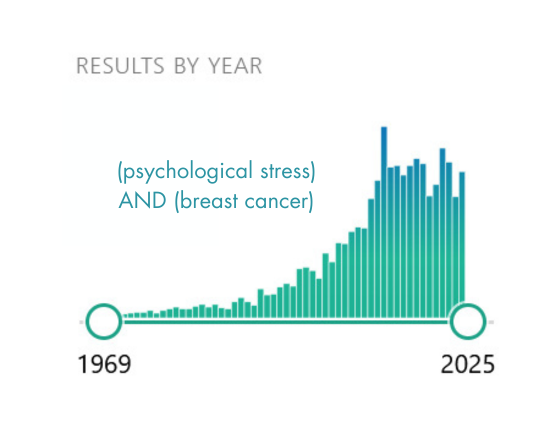 A search (December 9, 2024) using the following keywords: (psychological stress) AND (breast cancer) at PubMed (search engine at the United States National Library of Medicine, the NIH, Bethesda, MD) provides 3,083 results. Thus, many scientists have also linked stress to the development and progression of breast cancer.
Interestingly, breast cancer survivors consider stress a major factor for their disease. According to this report, addressing a survey published in Psychooncology, women who had survived breast cancer believe that there is a link between breast cancer and psychological stress. Or, as BBC put it, they believe stress caused their condition “than blame genetics or any other factor”.
Beta Blockers and Their Sizeable Potential in Cancer
Conceptual frameworks derived from the field of neuroendocrine-immunology at the interface between neuroscience, endocrinology and immunology hold substantial potential for the development of promising therapeutic interventions in common human diseases.
Beta blockers may represent a good example of this development and we discussed this new concept all the way back to 2011.
Why this might be the case?
Beta blockers or β-blockers are a class of medications used mostly to treat hypertension, heart failure, arrhythmias and to protect the heart from a second heart attack. Beta blockers are competitive antagonists that block β-adrenergic receptors for the endogenous catecholamines – norepinephrine (noradrenaline) and epinephrine (adrenaline).
Norepinephrine and epinephrine represent the major neurotransmitter, and, respectively, the major hormone of the sympathetic nervous system and the sympathoadrenal system, major component of the stress response, also known as the fight-or-flight response.
Above in this section, we outlined some new findings that catecholamines via β-adrenergic receptor signaling are involved in tumor-related immunosuppression, and/or directly in tumor development.
But why beta blockers hold potential and what are the mechanisms? Below are listed some of them:
- The presence of sympathetic nerves in majority of human cancers.
- Immune cells and tumor cells express beta-adrenergic receptors (β-ARs).
- Activation of β-adrenergic receptors mediate a selective suppression of Th1-dependent cellular immunity, and upregulation of TGF-β, IL-6, IL-8 and IL-10.
- A direct effect of β-adrenergic receptors, locally, on tumor proliferation and metastasis.
- The special case of the myeloid-derived suppressor cells (MDSCs), see above.
- The special case of Natural killer cells.
Since their identification in the 1970s, NK cells have been described as critical contributors to the immune control of cancer cells. Importantly, their presence in the peripheral blood correlates with better prognosis in cancers, and low NK cell activity is associated with increased cancer risk.
 Epinephrine (adrenaline) and norepinephrine (noradrenaline) via the β2-adrenergic receptor pathways are able to suppress NK cells and NK-mediated Tc and macrophage activation. Abbreviations: IFN, interferon; Ma, macrophage, NK, Natural killer cell; TC, a cytotoxic T cell (also known as cytotoxic T lymphocyte, CTL, T-killer cell, cytolytic T cell, CD8+ T-cell); TNF, tumor necrosis factor. From: Beta-Blockers Emerge as Beneficial in Early and Triple-Negative Breast Cancer.
It appears that NK cells are the most ‘sensitive’ cells to the suppressive effect of stress:
- In the past, NK cell activity has been used as a bona fide index of stress-induced suppression of cellular immunity.
- The potent suppressive effect of catecholamines on NK cell activity is probably due to the fact that NK cells possess the highest number of β2-ARs among lymphoid cells.
- Overall, the NK cells’ ‘supersensitivity’ to catecholamines’ effects is perhaps a major factor contributing to the suppression of cellular immunity and perhaps its complete failure in cancer (cf. Elenkov et al. 2000).
At BrainImmune Marisa Coelho et al. outlined that beta-blockers hold a promise for a novel class of antitumor agents. For example, she discussed retrospective studies showing that cancer patients taking beta-blockers survive longer due to reduced metastasis and tumor recurrence rates. Hence adjuvant use of beta-blockers in cancer chemotherapy has been actively investigated, which may open a window of opportunity for therapeutic intervention in cancer. For instance, propranolol has been shown being effective at multiple points in the metastatic cascade.
Furthermore Coelho et al. suggest that future research should include: the evaluation of β-ARs on tumor tissues as a tool to select the patients who might preferentially benefit from beta-blockers treatment; and the characterization of the beta-blockers which are more often associated with positive outcomes and which are more likely to benefit cancer patients.
At BrainImmune Stephanie McArdle also discussed that timing is everything, addressing the novel combinatorial approaches to overcome the immunosuppression in prostate cancer. Interestingly, in prostate cancer, intact sympathetic nerves are critical for tumor formation. Of note, men who take beta blockers, have been found to have a lower incidence of prostate cancer [cf. Ref. 23, her list]. Of particular interest is the fact that most of prostate cancer originate from the peripheral zone which is where most of the nerves are located [cf. Ref. 24]. Moreover, high risk cancer patients have a higher nerve density than low risk patients.
Breast cancer is the most common malignancy in women worldwide. Most breast cancer patients present with hyperactive sympathetic nervous system (SNS). Hyperactive SNS in these patients may drive and promote tumor proliferation, growth and metastasis. These features appear to be extremely amplified in triple-negative breast cancer (TNBC) patients.
Recently, we presented a summary of the systematic reviews and meta-analysis data; moreover, we discussed recent evidence indicating that clearly in early and triple-negative breast cancer, beta-blockers hold therapeutic potential. At least for propranolol the potential for repurposing is being actively pursued in multiple clinical trials.
Fibromyalgia and Chronic Fatigue Syndrome
Fibromyalgia
Professor Manuel Martínez-Laví, an established expert in the field, discusses a new evolving concept for the presence of a sympathetic dysautonomia in fibromyalgia. His group has proposed dysautonomia as an explanation to the multiplicity of fibromyalgia symptoms including its main complaint; widespread pain, i.e. that fibromyalgia is a sympathetically maintained neuropathic pain syndrome.
 Frida Kahlo: Self-Portrait with Thorn Necklace and Hummingbird (1940); Credit: Wikipedia; Mexican artist Frida Kahlo (1907-1954) is remembered for her self-portraits, pain and passion. Khalo was a self-taught artist who began painting at the age of 18 when a serious bus accident left her in a body cast to heal her spine and pelvis. From that time on, Frida suffered severe, widespread pain and profound fatigue. According to Martinez-Lavin et al., Arthritis Rheum., 2000, 43:708, Frida suffered from post-traumatic fibromyalgia. This can explain her chronic, severe, widespread pain accompanied by profound fatigue.
He concluded that the sympathetic dysautonomia is frequent in fibromyalgia patients. Such dysautonomia is characterized by relentless sympathetic hyperactivity accompanied by sympathetic hypo-reactivity to different stressors.
We also discuss an abnormal activation of microglia in fibromyalgia – microglia in patients with fibromyalgia are probably hypersensitive and overproducing tumor necrosis factor (TNF)-α in response to the neurotransmitter ATP.
The inflammatory/immune component in fibromyalgia is characterized by the involvement of cytokines and chemokines such as IL-8 and IL-17. Interleukin-8 (IL-8), also known as neutrophil chemotactic factor is a chemokine known to activate neutrophils and is an important factor for the migration and infiltration of neutrophils at inflammation sites.
A 2017 study found elevated IL-8 levels in both cerebrospinal fluid (CSF) CSF and plasma fibromyalgia samples, confirming previous reports, whereas high levels of the chemokine CX3CL1 (also known as fractalkine) were monitored only in CSF samples. This may indicate the presence of both neuroinflammation and chronic systemic inflammation in fibromyalgia.
A 2013 study is perhaps the first to document increased plasma levels of interleukin-17A (IL-17) in fibromyalgia patients. A 2017 study provides further evidence that interleukin (IL)-17 contributes to neuropathic pain through the activation of astrocytes and secretion of proinflammatory cytokines.
Chronic fatigue syndrome (CFS)
Efforts to identify immune biomarkers in CFS have produced inconsistent results. Of particular interest was the marked association of interferon (IFN)-γ with the early phase of CFS illness that was detected through logistic regression modeling.
Another study suggests a deficiency of interleukin (IL)-10 in chronic fatigue syndrome (CFS). The ‘immune hormone’ IL-10 is a major anti-inflammatory cytokine in periphery and the central nervous system (CNS).
Of the 27 cytokines examined; only IL-10 was significantly decreased in the CFS group. A reduction in IL-10 may increase inflammation in the CNS as it may suggest increases in c-Jun N-terminal kinase (JNK), a known inducer of helper T cell differentiation and secretion of proinflammatory cytokines. As hippocampal related IL-10 is known to suppress JNK, reduced levels of IL-10 may have significant implications on the inflammatory processes in the CNS.
Alzheimer’s Disease and Dementia, Major Depression and Parkinson’s Disease
Stress and the risk of developing dementia and Alzheimer’s
Stress is a risk factor for amnestic mild cognitive impairment (aMCI), and the 2016 Albert Einstein College of Medicine aging study reporting high levels of perceived stress are associated with a 30% greater risk of incident aMCI. Subjects in the highest-stress quintile had an almost 2.5-times greater risk of developing aMCI, and were more likely to be female with high levels of depression.
Also we discuss a Swedish study led by Lena Johansson indicating that stress in middle-age women is associated with increased risk of dementia and Alzheimer’s disease decades later in life – perhaps the first population study on the relationship between midlife stressors and increased risk of dementia in late life.
Furthermore, Robert Wilson et al. provided new evidence that anxiety and vulnerability to stress contribute to the development of dementia. In a prospective study of more than 700 old persons the authors demonstrate that neuroticism’s association with AD risk primarily reflects two components: vulnerability to stress and anxiety.
The role of cytokines
A PNAS study indicates that interleukin-33 (IL-33) is able to improve memory deficits and reduce the accumulation of β-amyloid in APP/PS1 mice model of Alzheimer’s disease.
Also, targeting neuroinflammation may be one key to slowing Alzheimer’s Disease. As discussed by Edward Tobinick a substantial and significant decreased risk of developing Alzheimer’s disease is reported in individuals with rheumatoid arthritis treated with the drug etanercept. This supplements the accumulating evidence pointing to targeting neuroinflammation, specifically excess of Tumor Necrosis Factor (TNF)-α, as a promising new direction for Alzheimer’s disease research. Of note, TNF-α has also been suggested as a possible link between age-related endocrine dyscrasia and Alzheimer’s Disease.
A Nature Medicine article is perhaps the first one to suggest interleukin (IL)-23 involvement in Alzheimer’s disease. The study reports that the microglial cells in the brains of the mouse model of Alzheimer’s disease expressed high levels of IL-12 and IL-23. This work suggests that blocking IL-12 and IL-23 in APPPS1 mouse model shows promise as an experimental therapeutic approach to Alzheimer’s disease.
Candidate biomarkers
A study published in Translational Psychiatry indicates that low systemic (plasma) levels of the repressor element 1-silencing transcription (REST) factor represent a candidate biomarker of cognitive decline and Alzheimer’s disease.
Also, some complement factors such as clusterin may serve as reliable predictors of Alzheimer’s disease (AD) progression. In one of the first untargeted proteomics analyses of plasma in AD, complement factor H (FH) was found to be elevated in Alzheimer’s disease plasma compared to controls.
 The brain glymphatic system

With a different perspective, Maria Teresa Ferretti and Maria Florencia Iulita reviewed the current understanding of fluid dynamics in the brain and cellular-molecular players governing the brain glymphatic system.
The glymphatic system, which clears the brain of protein waste products, is mostly active during sleep. Yet the glymphatic system degrades with age, and these authors discuss the role of the brain glymphatic system in the good night’s sleep and the onset of dementia.
Major Depression
Graham Rook, Charles Raison and Christopher Lowry discuss new evidence relating depression to chronic inflammation and the need to consider not only the psychosocial environment, but also our changing microbiological environment.
The authors link the increasing burden of chronic inflammatory states in modern urban societies to the loss of co-evolved immunoregulation-inducing ‘Old Friends’. This ‘hygiene hypothesis’, or as they prefer to call it, the ‘Old Friends’ hypothesis, suggests that one reason for the increasing incidence of chronic inflammatory disorders in developed countries is the depletion from the urban environment of immunoregulation-inducing organisms that accompanied mammalian evolution.
The ‘old friends’ theory suggests that immune interactions with pseudocommensal mycobacterial species, gut flora members and helminthes regulate the immune system, thus explaining lower rates of atopic (Th2-mediated) and autoimmune (Th1/Th17-mediated) diseases prior to the implementation of invigorated sanitation practices in developed countries in the early 20th century.
Depression and cardiovascular disease
We discuss a new study indicating that depression in coronary heart disease (CHD) is associated with high levels of inflammation in the context of low cortisol output and glucocorticoid receptor (GR) resistance. Here, there is a two-way relationship – people with depression develop heart disease at a higher rate; but, on the other hand, patients with established heart diseases have greater propensity to develop depression.
The authors of this study found that coronary heart disease (CHD) patients with depression had higher levels of C-reactive protein (CRP) and interleukin (IL)-6 gene expression, but lower levels of cortisol and glucocorticoid receptor (GR) mRNA.
They propose a model where the level of the endogenous cortisol is insufficient to limit inflammation in CHD patients with depression, due to hypo-activity of the hypothalamus–pituitary–adrenal axis and GR resistance. Thus, chronic inflammation in patients with CHD may contribute to the development of depression, which in turn leads to further activation of inflammatory processes as reflected in joint elevation in IL-6 expression and CRP.
The role of Oxytocin
We discuss new evidence for a deficit of oxytocin in women with depression, including patients with psychotic major depression (PMD). This study reports that plasma oxytocin levels were decreased in depressed females. As depression is much more common in women, the study may also help explain the female preponderance of depression.
Another study by Karen Parker et al. links low levels of oxytocin with anxiety in children. In this study both plasma and cerebrospinal fluid (CSF) oxytocin concentrations significantly and negatively predict trait anxiety in children. This supports the hypothesis of an imbalance of the endogenous brain oxytocin system in the etiology of anxiety disorders.
The role of Interleukin-6 (IL-6)
A study published in the Proceedings of the National Academy of Sciences of the USA is perhaps the first to demonstrate that the magnitude of peripheral interleukin (IL)-6 responses preceding stress challenge may confer inter-individual differences in susceptibility or resilience to a subsequent social stressor.
The authors conclude that individual differences and more specifically their IL-6 hyper-responsiveness are preexisting and may determine a greater risk of developing a stress-related disorder, such as depression in a subgroup of susceptible individuals.
 Another study suggests that the appearance of depressive symptoms in inflammatory conditions might be primarily linked to an increase in central IL-6 concentration. In this study, Harald Engler and Manfred Schedlowski demonstrated that IL-6 might be one of the key messengers transferring the inflammatory signal from the periphery to the brain.
They show that in healthy male volunteers the administration of low-dose endotoxin induced a robust increase of IL-6 in the cerebrospinal fluid (CSF). They observed a strong association between the endotoxin-induced increase of IL-6 in the CSF and the severity of mood impairment. These findings suggest that the appearance of depressive symptoms in inflammatory conditions might be primarily linked to an increase in central IL-6 concentration, identifying IL-6 as a potential therapeutic target in mood disorders.
Parkinson’s disease (PD)
We also discuss the role of peripheral immunity in cognitive decline during Parkinson’s disease. Patients with Parkinson’s disease (PD) and cognitive decline exhibit a preferential pro-inflammatory immune phenotype and a dysregulation in the CD4+ T regulatory compartment.
These data reinforce the concept that peripheral immunity is involved in the pathophysiology of cognitive decline in PD. The dysregulation of the T regulatory compartment may impair the anti-inflammatory functions of these cells, hence contributing to the perpetuation of an inflamed central environment resulting in worsening of neurodegeneration. Thus, the peripheral immune system represents a suitable therapeutic target in PD.
We also comment recent evidence supporting β2-AR agonists as novel antiparkinson drugs and the ability of salbutamol to enhance the therapeutic response to levodopa as well as to improve motor performance, possibly through an anabolic effect on skeletal muscle mass. Marco Cosentino, Cristoforo Comi and Franca Marino discuss the role of the peripheral immunity and its links to neurodegeneration and the intestinal microbiota in Parkinson’s disease.
The authors point out that the emerging role of peripheral immunity and of the gut microbiota in the pathogenesis and progression of PD may provide unprecedented opportunities for the development of novel disease-modifying therapeutics. Would the contribution of (auto)immune mechanisms in PD be confirmed, candidate drugs for PD could include drugs already validated for diseases such as psoriasis, rheumatoid arthritis and inflammatory bowel disease, as well as less conventional approaches for the modulation of immunity.