
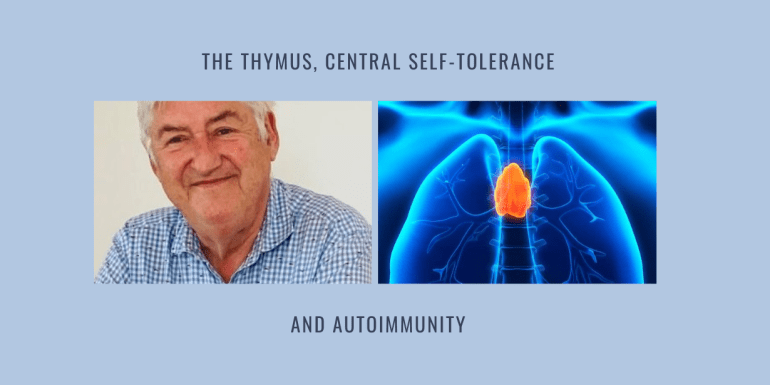
The Endocrine Society has selected Professor Vincent Geenen, MD, PhD (University Hospital of Liège, Belgium) to receive the 2026 Delbert A. Fisher Scholar Award.
As a recipient of this award, he will present at ENDO 2026 in Chicago the following prestigious lecture:
This conference will present the most important disruptions of concepts concerning the thymus since its discovery by Galenus (119-210 AC) in Antique Greece. At the beginning of the 20th century, this organ was still a complete enigma but the Swedish endocrinologist JA Hammar showed in 1921 important variations of thymic size in different endocrine diseases. Consequently, the thymus was considered as another component of the endocrine system. In 1946, the Austro-Hungarian investigator Hans Selye showed that stress, stimulating the hypothalalamic-pituitary-adrenal (HPA) axis, simultaneously caused thymic involution and adrenal hypertrophy.
In 1961, the Australian scientist JFAP Miller discovered that the thymus is the organ responsible for the development of immunocompetent cells, the thymus-dependent (T) lymphocytes. Miller then advanced the hypothesis of thymic hormone(s) that would be responsible for driving T-cell differentiation. However, despite decades of research, such thymus-specific hormones/growth factors were never clearly identified and the endocrine model could not be applied to the communication between thymic epithelial cells and developing T cells in the thymus
In the continuation of his revolutionary theory of clonal selection, the great Australian virologist and immunologist Frank Macfarlane Burnet coined the term ‘self-tolerance’ to characterize one of the cardinal properties of the adaptive immune system together with diversity, specificity and memory. He also prophesied that ’forbidden’ self-reactive T-cell clones are eliminated during T-cell differentiation in the thymus and that a failure in this process would be responsible for the initiation of autoimmune diseases. Such negative selection of ‘forbidden clones’ was independently demonstrated by different groups in 1988-1989, so that the thymus was definitively proved to play an essential and unique role in programming central immunological self-tolerance.
The basic mechanism implicated in this function is the transcription in the thymic epithelium of genes encoding neuroendocrine-related and tissue-restricted self-antigens that are presented to developing T-cells. Already during fetal life, this presentation promotes negative selection of ‘forbidden’ self-reactive T cells. Mainly after birth, this presentation also drives the intrathymic generation of self-specific regulatory T cells. Confirming Burnet’s prediction, numerous studies, including the identification of Aire and Fezf2 genes, have demonstrated that a thymus defect indeed plays a crucial role in the development of autoimmune disorders.
Endocrine autoimmunity is observed in type 1 diabetes (T1D), most of thyroid disorders, Addison’s disease, hypoparathyroidism, premature ovarian failure, some cases of hypophysitis and hypothalamitis (with ‘idiopathic’ diabetes insipidus). While most autoimmune endocrine diseases are quite effectively managed by non-expensive pharmaceutical treatment, T1D is a chronic devastating disease associated with severe complications affecting the cardiovascular system, kidney, retina, and peripheral nervous system. Blood glucose monitoring, insulin therapy and clinical care of diabetic complications constitute very heavy charges in terms of public health expenses.
The discovery of the central tolerogenic action of the thymus constitutes a scientific revolution according to the criteria formulated by the American philosopher Thomas Kuhn. This novel knowledge should pave the way for innovative tolerogenic therapies against autoimmunity, the heavy tribute paid by mankind mainly for the extreme diversity and efficiency of adaptive immunity. It is noteworthy that this work is mentioned in the 2026 version of the Stanford Encyclopedia of Immunology (Swiatczak, Bartlomiej and Alfred I. Tauber, Philosophy of Immunology, The Stanford Encyclopedia of Philosophy (Spring 2026 Edition), Edward N. Zalta & Uri Nodelman (eds.).
References
1) Geenen, Vincent (2021) The thymus and the science of self; Seminars in Immunopathology 43:5-14; doi.org/10.1007/s00281-020-00831-y
2) Geenen, Vincent and Wilson Savino (2019) History of the thymus – from a vestigial organ to the programming of immune self-tolerance. In: Gerald Passos (ed.) Thymus Transcriptome and Cell Biology. Springer, London, pp 1-18.
3) Martens, Henri, Beatrice Goxe and Vincent Geenen (1996) The thymic repertoire of neuroendocrine self-peptides in T-cell life and death. Immunology Today 17:312-317.
Related stories you may like:
Vincent Geenen: From Thymus Oxytocin to Immune Self-Tolerance and Autoimmunity
An Enterovirus Attacking the Thymus May Play a Key Role in Triggering Type 1 Diabetes
Thymus Emergence & Evolution of Immune and Neuroendocrine Systems
Growth Hormone (GH) Replacement and Thymus Function
Oxytocin and Williams Syndrome: Exploring Neurobiology of Social Behavior
New Evidence Indicates that Oxytocin Deficiency May Represent a Biomarker of Anxiety in Children
Prefrontal Cortex Oxytocin-Responsive Neurons As Regulators of Female Social & Sexual Behavior
Deficit of Oxytocin in Women with Major Depression
Oxytocin & vasopressin and human emotional and behavioral systems
Women with Low Postpartum Oxytocin Levels – Poor Bonding with Their Mothers and Struggle to Bond with Their Babies
Oxytocin Increases Generosity and Charitable Donations