
Most-Read 2022
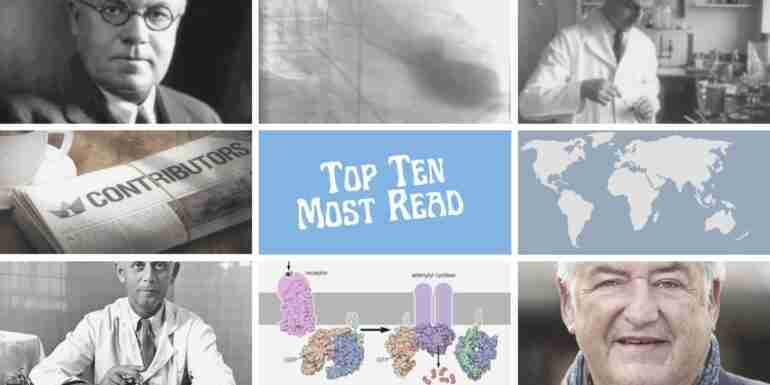
To keep the tradition going, we prepared a selection of the top ten most-read Brainimmune stories – the stories that captured your attention in 2022.
Here’s a look at our most popular articles with the highest number of pageviews:
 This Features and Faces short story brought few new insights and research trends related to the stress-induced cardiomyopathy. The most intriguing feature of these new studies indicates that myocardial inflammation is an important component of the pathophysiology behind stress-induced cardiomyopathy. Of note, the stress-induced inflammation, and particularly
the catecholamine-induced inflammation might represent the driving force leading to the development of acute symptoms and transiently altered ventricular contractility.
 Authored by David S. Goldstein, M.D., Ph.D. from the National Institutes of Health (NIH), Bethesda, MD, this article is a tribute to Walter Bradford Cannon and his outstanding work and concepts: ‘homeostasis’ (stability of the inner world); the ‘Fight or Flight Response’, and The ‘Sympathoadrenal System’.
In 1932, Cannon published The Wisdom of the Body, where he popularized the new term of the dynamic equilibrium/steady state of the internal milieu or homeostasis. Dr. Goldstein’s article outlines the nature of these concepts and how these three theories were developed in the first half of the 20th century.
An article written by professor Derek Burke who had the chance to work along Alick Isaacs – a fascinating story about “the early days of virology”. Also, it describes the first paper of the series in the British Journal of Experimental Pathology with the title: ‘Studies on the production, mode of action and properties of interferon’, published in 1957, 38: 551-562.
 This is the only paper for which Jean Lindenmann and Derek Burke were co-authors with Alick Isaacs. Thus, over the three years 1957 to 1960, “interferon had been firmly established as the mediator of virus interference, as a protein which was purifiable, and as an important new lead in dealing with virus infections”.
Another unique article, written by professor Istvan Berczi, who had the chance to work along Hans Selye. It is focussed on the ‘birth of the stress concept’, and the 1936 Nature magazine Selye’s article under the title ‘A syndrome produced by diverse nocuous agents’; the introduction of the terms ‘general alarm reaction’ and ‘general adaptation syndrome’. And, the discovery of the ‘hypothalamus-hypophysis-adrenal-thymus axis’, which Selye considered one of the most significant; about the anti-inflammatory action of steroid hormones, etc.
In this article Dr. Stephanie McArdle, a Senior Research Fellow at the John van Geest Cancer Research Centre, UK, summarizes the possible time and interventions for prostate cancer prevention and treatments, and proposes sequence of novel combinatorial immunotherapeutic interventions for different stages of prostate cancer. Here, timing is indeed everything, as active immunotherapy is likely to be most effective if given shortly after androgen-deprivation therapy (ADT).
Written by professors Ashley Grossman and David Jessop, the article describes the first scientifically rigorous demonstration of the pressor effects of suprarenal extract by George Oliver and Edward Schafer in 1894 at University College London. This laid the platform for purification of the active substance which was first achieved by John Abel in 1899 at Johns Hopkins University, Baltimore and independently by the Japanese scientist Jokichi Takamine in his own laboratory in New York City.
This short Features and Faces article is about the work of professor Vincent Geenen MD, PhD, Research director at the Fund of Scientific Research of Belgium, professor at the University of Liège, and head of clinics in endocrinology at the University Hospital of Liège. It is focussed on his innovative research related to the thymus at the crossroad between the nervous, endocrine and immune systems; the neurohypophysial hormone oxytocin, synthesized in thymic epithelial cells; and the thymus dysfunction, as the primary event in the development of the autoimmune diabetogenic process.
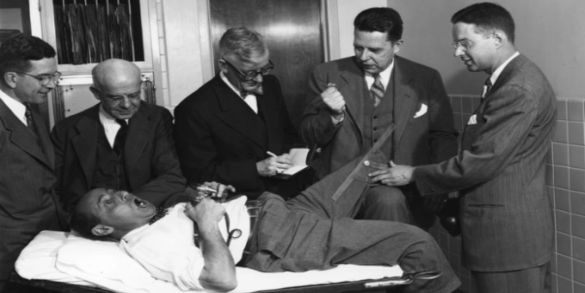 Dimana D. Broadway, MD and Ronald Wilder, MD, PhD, discuss here the work of Dr. Philip S. Hench (1896-1965), who introduced cortisone into the clinical practice of medicine, and a “clinician who was widely recognized for his oratory skills and meticulous clinical research”. Drs. Broadway and Wilder outline some major steps into the discovery of cortisone more than sixty years ago. This according to the authors “inspired a wealth of endocrinologic and immunologic research and indelibly linked, often with a ‘love-hate’ aspect, the study of hormones to the study and treatment of immune-mediated diseases”.
Professor Marco Cosentino summarizes here the new evidence regarding the ability of immune cells themselves to produce and utilize dopamine, noradrenaline and adrenaline. This new evolving concept about the endogenous catecholamines in immune cells represent a novel and emerging area of research with wide implications. As many dopaminergic and adrenergic agents are already in clinical use for several non-immune indications, this may represent an extremely attractive source of immunomodulating agents with significant therapeutic potential.
A new evolving concept indicating a link between fibromyalgia and gut bacteria. Whether this is a causative association or not remains unclear, but certainly these preliminary observations may pave the way for further studies elucidating the pathophysiology of fibromyalgia.
If you like what we are doing, consider supporting our work and mission today.
You can contribute online through PayPal. Click the PayPal button below (no PayPal account necessary).
We appreciate your willingness to support our work and mission.